
AI Civic Policy & Service Design
Service Design, Service Blueprint, Workshop Facilitation, Design Strategy
TL;DR
Austin's new AI policy for City staff was being finalized without ever being tested against real staff workflows. I built a journey map to surface where it would break down, then pitched and facilitated a working session with the two executives leading the policy effort to review it live. The session led to revisions across 11 policies, CTO approval, and a staff-facing AI policy guide.
Goals
Primary Goal: To slow down, be intentional, and stress-test the draft AI policies to identify gaps and areas for improvement.
Secondary Goals: Make it easier for City staff to comply with AI policies while demonstrating the value of human-centered design to City leaders.
Problem
Without clear and cohesive guardrails, City staff across departments risk using AI tools in ways that create gaps in accountability, equity, and public trust.
Constraints
Tight timeline, no participatory design session built into the existing policy development process, and the need to quickly align two executives across separate departments (Austin Technology Services and the Innovation Office) to avoid delaying the policy release.
UX Methodolgies & Approach
Methodologies: Journey mapping, desk research, participatory design, UX writing.
Approach: Instead of waiting for a participatory session, I proactively created a journey map detailing how City staff use GenAI tools. I also drafted a one-page proposal for a working session with the two executives leading the policy, presenting it as a way to reduce the risk of releasing an incomplete policy and to simplify compliance for staff.
Developing the Journey Maps
I used Kaospilot's 5E model to structure the map, since its five phases helped ensure the map captured the full staff experience rather than just the moment someone is actively using a tool. Each phase corresponds to how staff progresses in using a GenAI tool, from initial awareness to routine use.
I categorized City staff into three groups: those using non-sensitive data, those using sensitive data, and those requesting a new AI tool. After documenting the steps for each group, I added draft policies and communication touchpoints at each stage. The map served as the primary artifact in the design session.
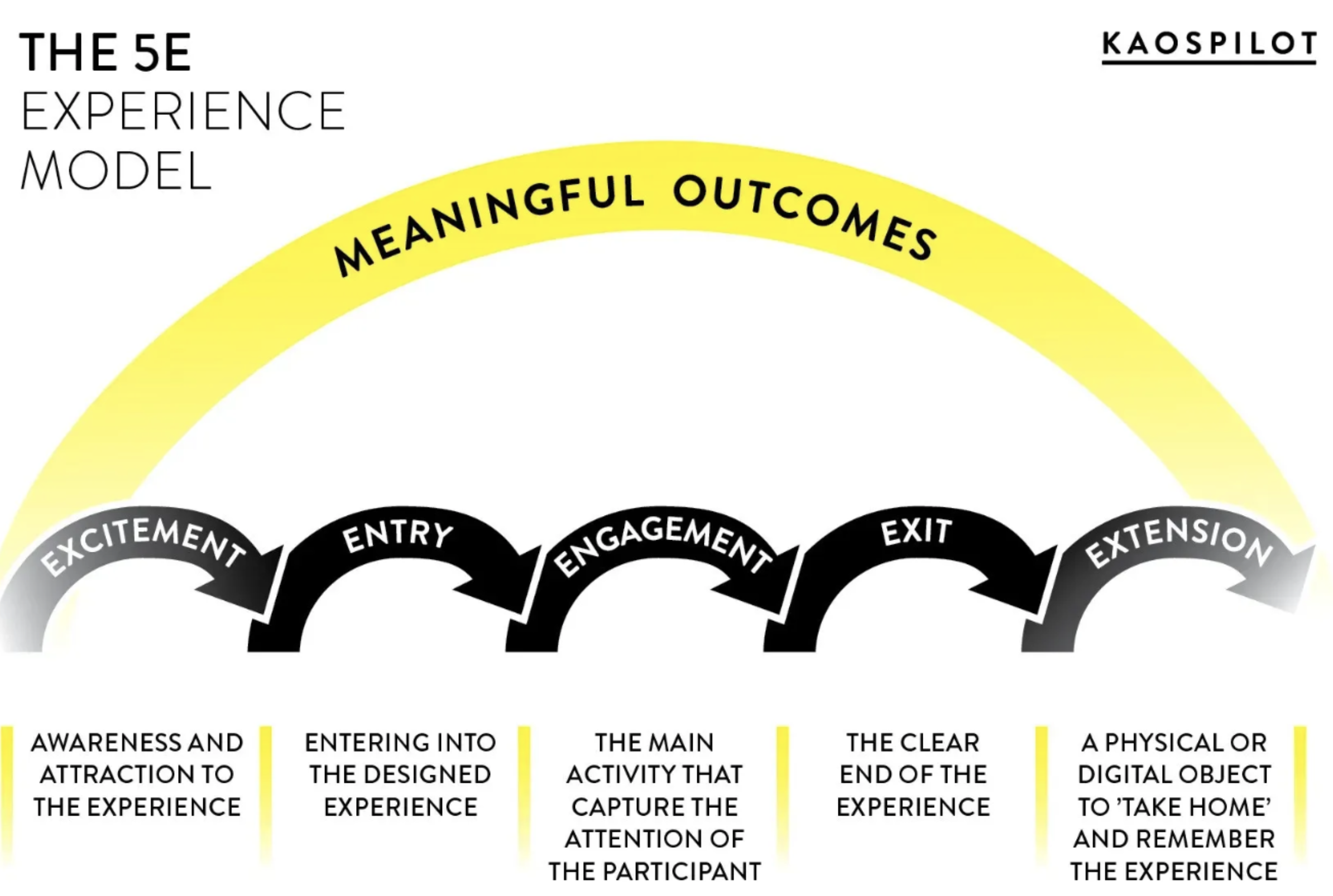
Kaosplit 5e model template
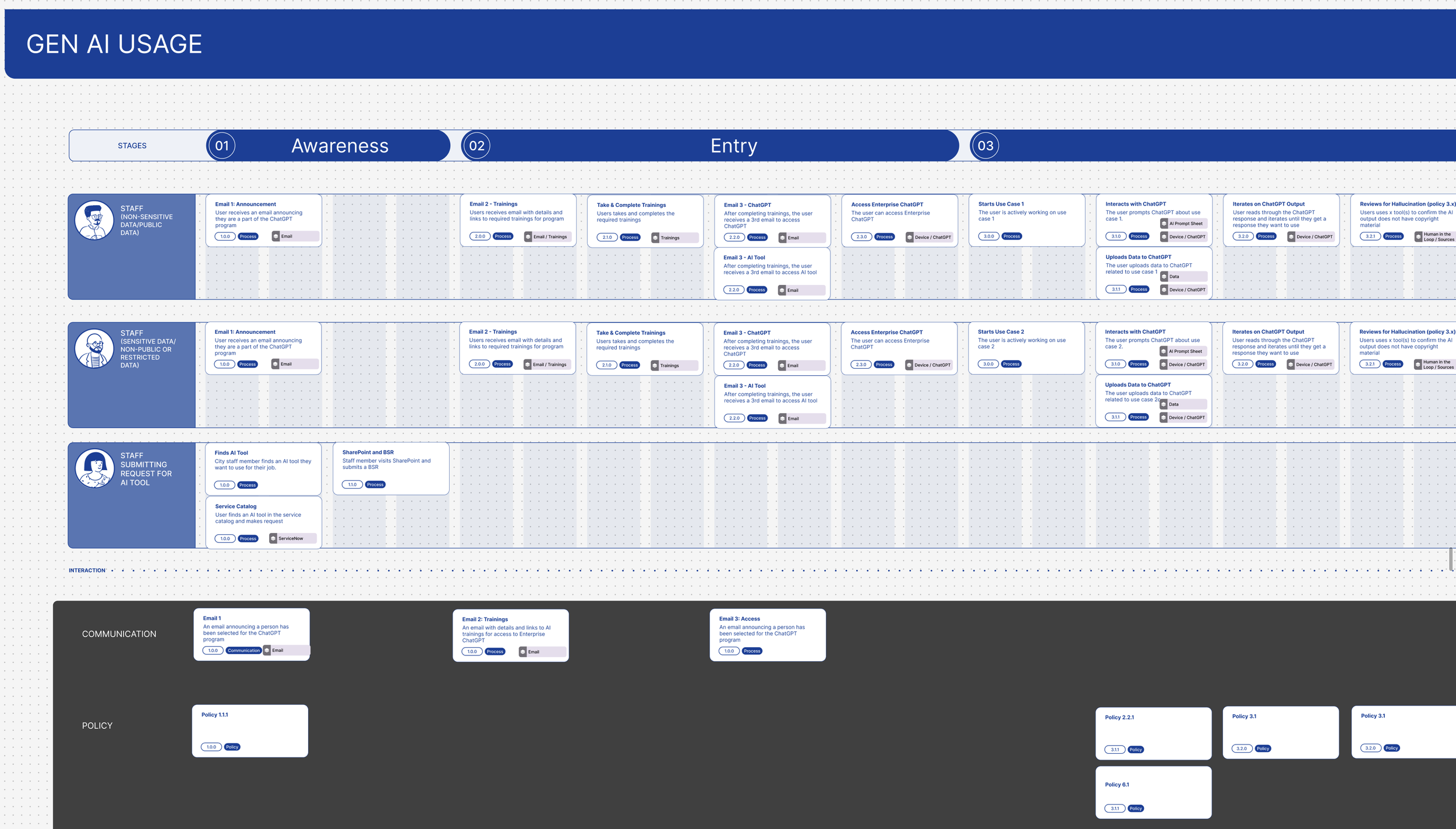
Section of the AI journey map depicting a City staff member using PII data, not using PII data, and requesting an AI tool in relation to the pilot and policies.
AI Policy Participatory Design Session
During the design session, we aligned on our goals and then reviewed a large printout of the 3 City staff journeys alongside the draft AI policies. The session had stakeholders reflecting on how people will experience the policies in real life. This was extremely helpful in helping us identify gaps and aligning multi-agency leaders on areas for improvement within a short window of time.
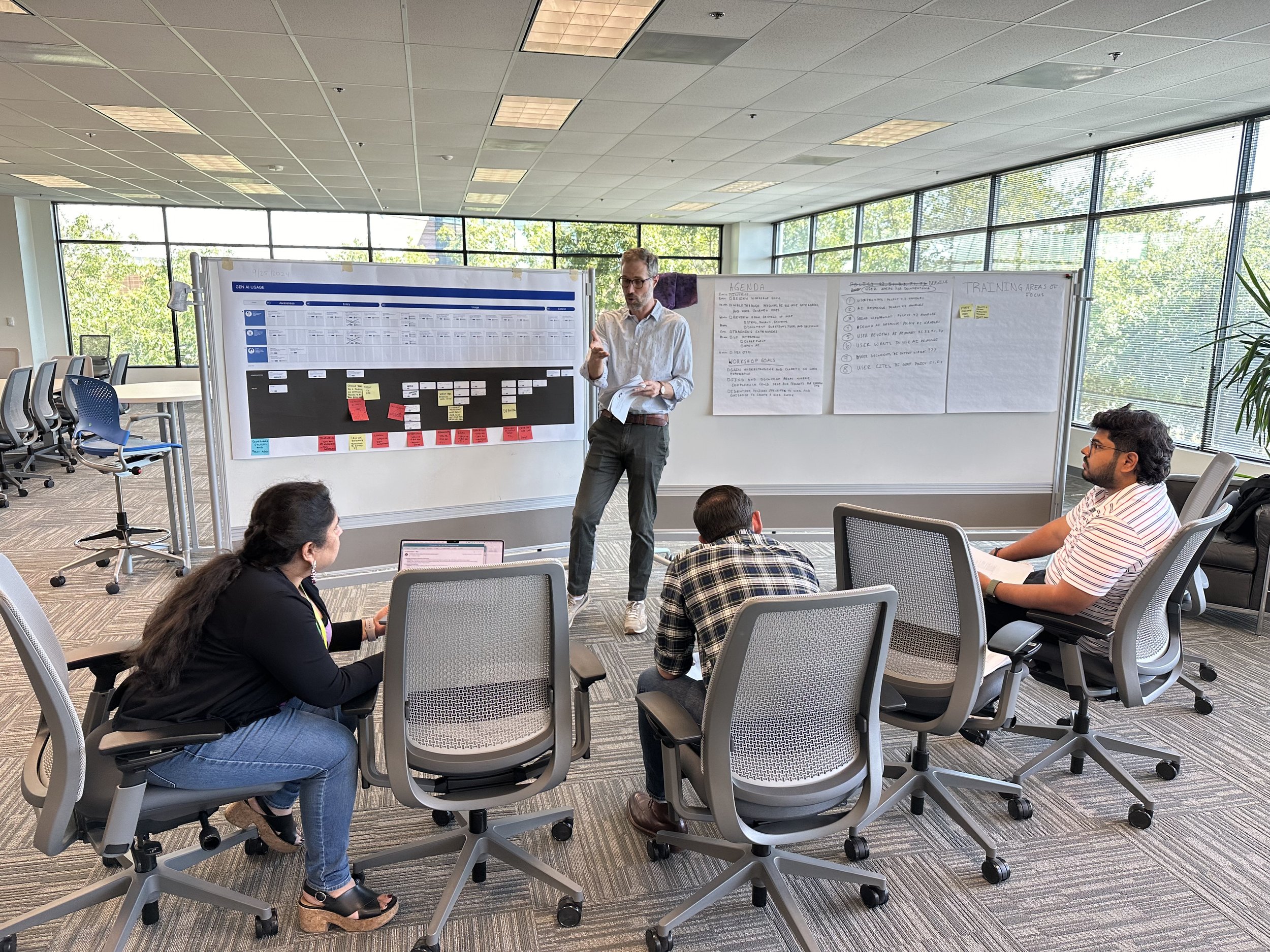
Reviewing the AI journey map and policies with executives from Austin Technology Services and Office of Innovation.
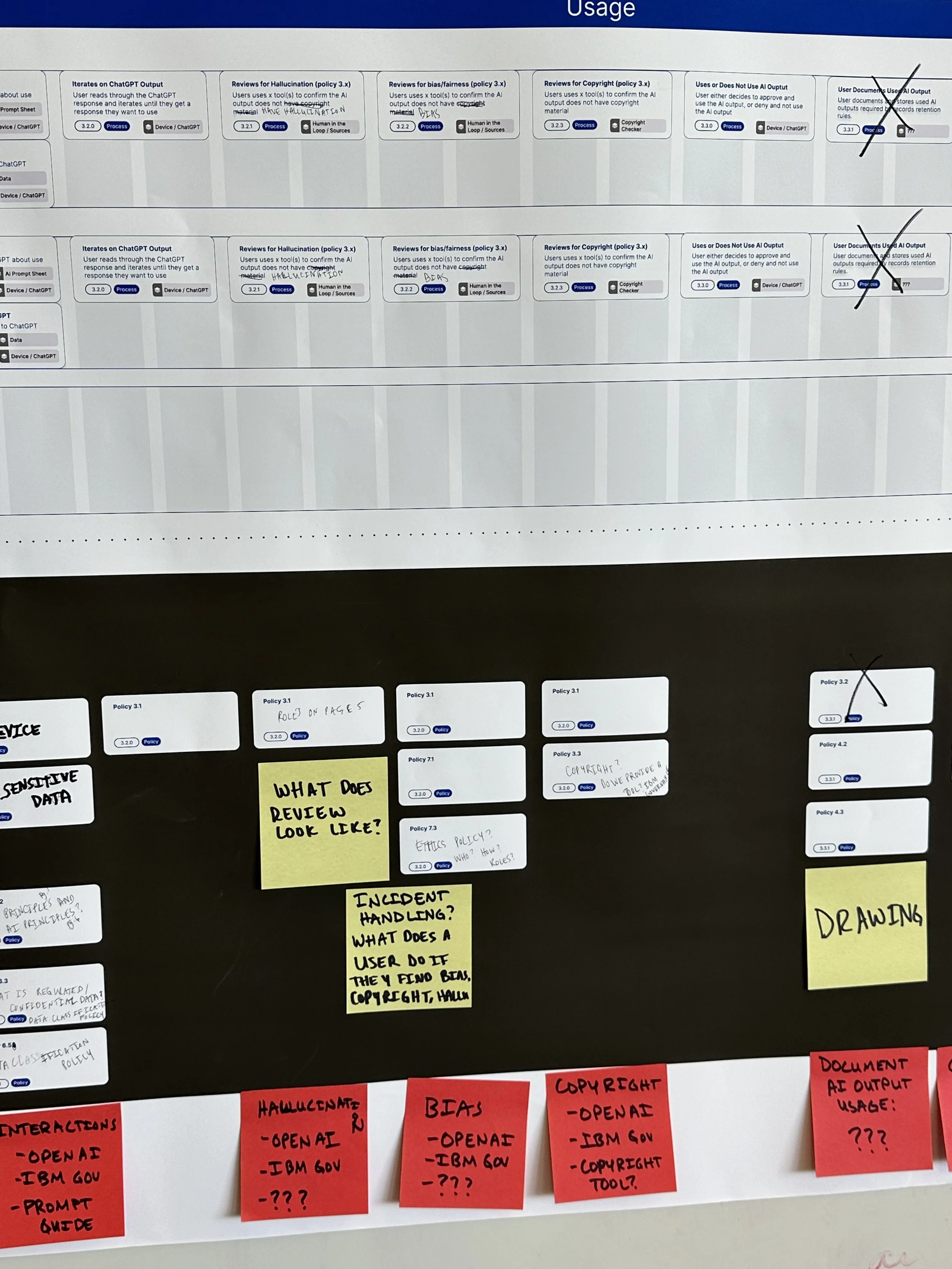
Visual of the journey map with AI policies below, prompting questions and flagging areas of concern
Outcomes & Impact
We accomplished our goals.
The design session helped the team slowed down, be intentional, and stress-test the policies to improve them. In total, the session led to us adding 3 policies, updating 6 policies, and removing 2 policies.
The outputs of the session made it easier for City staff to comply with policies by creating an AI policy user guide. The guide grouped the policies by user action, whereas the policy document grouped the policies by guiding principle.
The design session demonstrated the value of human-centered design with City leaders. After the participatory design session, the Deputy Chief Information Officer asked me to facilitate a workshop to help two departments align on their process for the NIST Cybersecurity Framework.
Since the AI pilot, the City has expanded its AI use cases across permitting, climate, mobility, and more.
AI Policy & Guidance
AI Policy User Guide
Building on the Foundation
After the project concluded, I reflected on ways to build on the foundation the team created. They include:
Pairing the policy principles to AI training material. This was championed by the City of Austin’s Chief Learning Officer.
Create an official City AI graphic to be used when citing AI outputs.
Partner with AI companies to embed City policies into their workflows to increase awareness and compliance for users.
Engage other governments to share learnings and best practices.